A receding hairline generates a lot of advice, most of it aimed at selling you something or talking you into a style that fights the hairline every morning. The plain truth is that hairlines recede on their own schedule, the right cut works with what is there, and a shorter, honest style looks better than a longer, defensive one almost every time.
This piece sorts the common claims about living with a receding hairline into myth and fact, then covers the styles that hold up in Charlotte, from the team at Gillespie Barber & Stylist, where classic cuts and fades are everyday work.
The claims, sorted
| Claim | Verdict | The plain version |
|---|---|---|
| Wearing hats causes hair loss | Myth | Hats do not cause pattern hair loss. A hat worn daily may even help, since sun protection matters more as coverage thins. |
| Cutting hair short makes it grow back thicker | Myth | A cut changes how ends look, not how follicles behave. Short hair can look fuller because the length is even, which is a real benefit, just not regrowth. |
| Longer hair on top hides recession best | It depends | Some length with texture can soften a hairline. Too much length, especially combed forward or over, draws the eye straight to the thin area. |
| Shorter sides make the top look fuller | Fact | Reducing bulk and contrast at the sides makes the top read as denser by comparison. This is the working principle behind most good cuts for a receding hairline. |
| A buzz cut is giving up | Myth | A buzz at the right guard length is often the sharpest option once recession is advanced. It removes the contrast between thick and thin areas entirely. |
| Products can restore the hairline | Myth | Styling products can add texture and the look of fullness for a day. They do not move a hairline, and heavy product clumps thin hair and shows more scalp. |
Styles that work with it
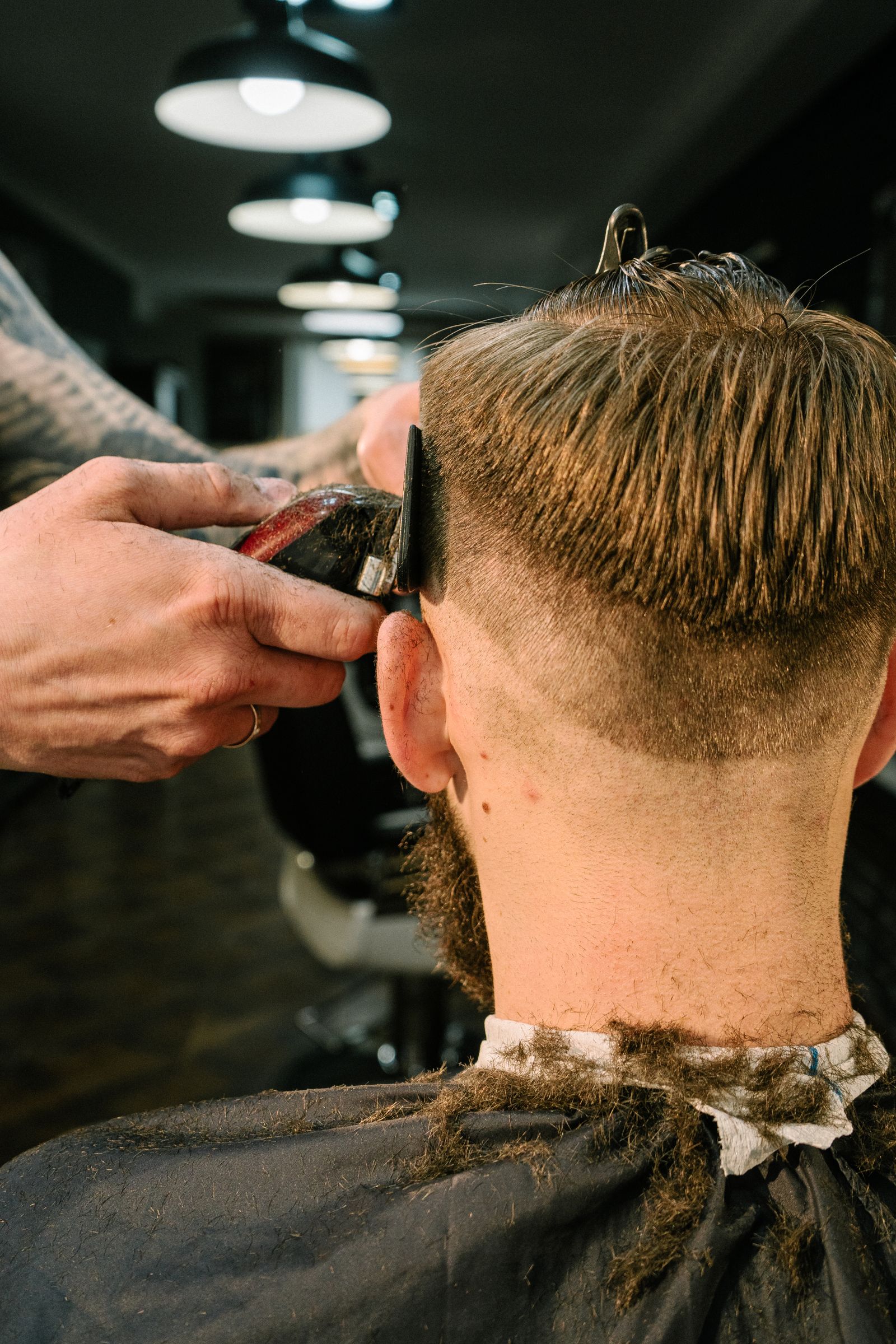
Start with shorter sides. A fade or tapered side takes away the visual weight that makes a receding top look thinner by contrast. On top, texture beats length. A short, textured crop worn naturally forward, a crew cut with a little variation, or a classic short back and sides all keep the eye on the overall shape instead of the hairline itself.
The middle stage is the hardest, when there is still plenty of hair but the corners have clearly moved. That is where men tend to grow the front longer and push it around, which works for about a week. A barber can shape that stage honestly: keep the top modest, break it up with texture, and keep the edges clean so the whole cut looks chosen. Clean edges matter more, not less, as hair thins, because neatness reads as intention.
The point where a buzz is the honest answer
There is a stage where the remaining hair on top is much thinner than the sides and no arrangement changes that. Clipping it all to one short length is not surrender; it equalizes everything, takes five minutes to maintain, and suits most head shapes well. Try a longer guard first, such as a number 3 or 4, and go shorter over a couple of cuts if you like it. Pair it with a shaped beard if you wear one, and the overall look gains the definition the hair no longer provides.
Daily habits that help the look
Use less product than you think, and choose matte over shiny. Wet-look gels separate thin hair into strands and show scalp under Charlotte sunlight. A small amount of matte paste, worked in when the hair is dry, adds texture without the separation. Protect the scalp from the sun once coverage thins; a hat outdoors or sunscreen on the scalp prevents burns that are both painful and, in photos, very visible.
Finally, keep the trim schedule tighter than you did before. Thin hair shows growth unevenly, and a cut that is two weeks overdue can look scruffy rather than full. Every three to four weeks keeps the shape deliberate.
Common questions
Does a fade suit a receding hairline?
Usually yes. Shorter, blended sides reduce contrast with the top, which makes the remaining hair look fuller and the whole cut look intentional.
When should I just buzz it?
When the top is clearly much thinner than the sides and styling it takes daily effort for a result you do not like. Start with a longer guard and shorten gradually if you want.
Can anything stop a hairline receding?
That is a medical question for a doctor, not a barber. What a barber can do is give you a cut that looks good at every stage, and that part is fully solvable.
Photos in this guide are representative stock images.
← All guides from Gillespie Barber & Stylist← Back to Gillespie Barber & Stylist